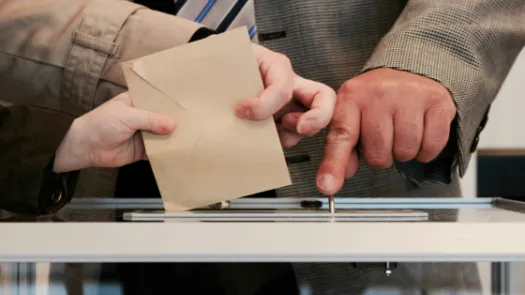
Photo by Dmitrii Vaccinium on Unsplash

During the 20th anniversary of the Declaration of Principles (DoP) for International Election Observation, election observation organisations representing all regions of the world gathered to reaffirm their commitment to supporting the principles for international election observation and published Principles and Guidance for Observing Personal Data Use in Elections.
Photo by Dmitrii Vaccinium on Unsplash
Last week marked the 20th anniversary of the Declaration of Principles (DoP) for International Election Observation. Over 50 endorsing election observation organisations representing all regions of the world met at the United Nations to reaffirm their commitment to supporting genuine democratic elections and to the principles for international election observation as set forth in the Declaration.
Reflecting on the increasing role played by personal data and data-intensive technologies in the election cycle, they also published Principles and Guidance for Observing Personal Data Use in Elections. These principles cover the role of personal data in political campaigns as well as in the administration of elections.
As they rightly note, “personal data is increasingly a political commodity, and can be bought, sold, traded, and - in some cases - stolen, to contest elections and at times to gain competitive advantage”. Further, “advancements in data systems, biometrics and other technology in election administration means that election management bodies are collecting and managing large amounts of sensitive personal data. This requires clear and transparent safeguards to ensure that information is managed responsibly, securely, in line with open data standards, and resistant to political pressures and bias.”
These principles and guidance are key to support the capacity of international election observers and independent citizen observers to monitor the use of personal data during the election cycle. Their publication by the DoP is an important recognition by the major election observation organisations (including the African Union, Commonwealth, League of Arab States, Organisation of American States, European Union and the United Nations, among many others that modern election observation needs to scrutinise how personal data and technologies are regulated and used during and around elections. A number of international election observers have already incorporated in their working documents monitoring methodologies to address the complex issues around the use of digital technologies in elections. For example the recently updated European Union Handbook on election observation includes guidance on how to monitor the adherence to privacy and data protection standards in the implementation of biometric voter registration and online political campaigning.
Privacy International has been working on the role of data and technology during elections for over five years, partnering with election observers such as the Carter Center in electoral observations in countries such as Kenya and Myanmar. We have also been working with regional election observation organisations like Transparencia Electoral to develop their tool to monitor data protection in Latin America. As noted in the DoP guidelines, our Technology, Data and Elections: A checklist on the election cycle has proven useful to enable electoral observers to:
Election observers can now learn more about the importance of technologies and data throughout the election cycle while playing our tech, data and elections card game.