
Search Taxonomy Terms
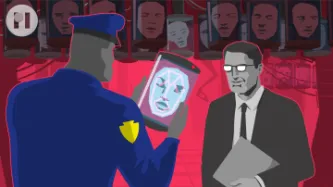
In March 2021 Privacy International intervened in a case in the European Court of Human Rights which challenges the use of social media intelligence by governmental agencies.
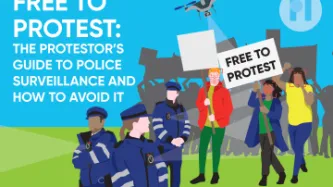
The 'Free to Protest' campaign highlights the range of surveillance tools that the police can use to monitor and identify you if you attend a protest, and how you can better protect yourself from protest surveillance.

Human rights defenders are continuously at risk of violence, intimidation and surveillance as a direct consequence of the work they do, with women or those opposing large corporations bearing the brunt of these forms of repression.
Privacy International spoke to four activists based in Colombia, Indonesia, Mexico and South Africa to learn more about their understanding and experiences of surveillance. Their testimonies illustrate how the promises that came with innovation and the use of new technologies have not been enjoyed by all equally, and how some groups in society - such as human rights defenders - have experienced the impact of surveillance and the exploitation of data by governments and companies more severely than others.
Below is an outline of the main issues that these four activists brought to our attention which reflect the concerns raised previously by other organisations and HRDs across the world.

The Home Office is currently developing a UK-wide police 'super-database' containing a vast amount of data, which mixes both evidential and intelligence material. Here is why PI is concerned about LEDS and what we are doing about it.
The seamless way we communicate using some of these technologies has helped many to organise politically and to express dissent online and offline. But the hidden data harvesting on which many of these technologies rely also threatens our ability to challenge power, no matter the type of government.

Governments are secretly collaborating with private companies. Here is why PI is concerned about surveillance outsourcing, and why together we urgently must expose them.
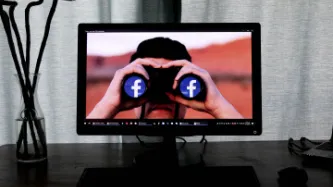
UK local authorities (Councils) are looking at people’s social media accounts, such as Facebook, as part of their intelligence gathering and investigation tactics in areas such as council tax payments, children’s services, benefits and monitoring protests and demonstrations.
In some cases, local authorities will go so far as to use such information to make accusations of fraud and withhold urgently needed support from families who are living in extreme poverty.

In the rush to respond to Covid-19 and its aftermath, government and companies are exploiting data with few safeguards. PI is acting to ensure that this crisis isn't abused.
Below are all the campaigns that are in progress.

Our data stored in the cloud is increasingly sought after by law enforcement agencies. Increasingly, it is obtained using ‘cloud extraction technologies’.