
Search Taxonomy Terms

We’re facing the end of privacy in public, because of the unchecked rise of facial recognition technology (FRT) in public spaces, shops and bars. If you're in the UK, join ‘The End of Privacy in Public’ campaign to demand that your MP finds out if facial recognition cameras are being deployed in your local area.

PI together with ARTICLE 19 intervened at the European Court of Human Rights to submit that digital device seizures and extraction performed at the border interfere with the rights to privacy and freedom of expression, in particular when performed on journalists.

The Inter-American Court of Human Rights holds Colombia accountable for arbitrary intelligence activities against human rights defenders. PI filed an amicus in this case challenging the surveillance of human rights defenders in Colombia.
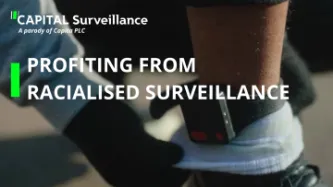
Capita PLC must stop profiting from the UK’s 'hostile environment'

Students shouldn’t have to trade their right to privacy in order to access their right to an education.

Identity systems create and facilitate exclusion, insecurity, and surveillance.

This legal challenge relates to a complaint filed with the UK's Information Commissioner (ICO) against the UK Home Office's policy and practice of using GPS ankle tags to monitor migrants released on immigration bail.

The United Nations have initiated a process to negotiate an international treaty on cybercrime (more specifically, a comprehensive international convention on countering the use of information and communications technologies for criminal purposes). An open-ended, ad hoc intergovernmental committee of experts (Ad Hoc Committee) was established to conduct the negotiations which are expected to continue until at least the end of 2023. The Ad Hoc Committee shall convene at least six sessions, of 10 days each, to commence in January 2022, as well as a concluding session in New York, and conclude its work in order to provide a draft convention to the General Assembly at its seventy-eighth session (i.e. in 2024).
PI believes that cybercrime can pose a threat to the enjoyment of human rights. At the same time, we are concerned that cybercrime laws, policies and practices are currently being used to undermine human rights. This is why we are actively participating in the UN negotiations to ensure that any proposed cybercrime treaty includes human rights safeguards applicable to both its substantive and procedural provisions.
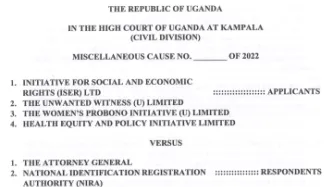
We filed an expert affidavit in a case challenging Uganda's digital ID system, Ndaga Muntu.

Our challenge to both the lawfulness and the secrecy of the legal regime governing Technical Capability Notices following the apparent use of one by the UK Home Office to require Apple to maintain the capability to provide access to all data stored on iCloud.