
Search
Content type: News & Analysis
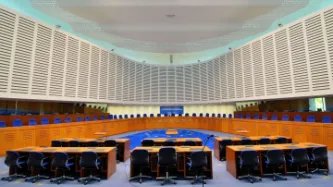
Today, Privacy International, along with nine other NGOs including Liberty and Amnesty International, attended a hearing before the Grand Chamber of the European Court of Human Rights (ECtHR) to revisit the Court's first ruling on our case challenging UK mass surveillance and intelligence sharing. In September 2018, the First Section of the ECtHR ruled that the UK government's mass interception program violates the rights to privacy and freedom of expression. Notwithstanding the positve aspects…

Content type: News & Analysis
According to the International Organization for Migration, an estimated 258 million people are international migrants – that is, someone who changes their country of usual residence, That’s one in every 30 people on earth.
These unprecedented movements levels show no sign of slowing down. It is predicted that by 2050, there will be 450 million migrants across the world.
Nowadays, it is politically acceptable to demonise migrants, and countless leaders have spewed divisive and xenophobic…
Content type: Long Read
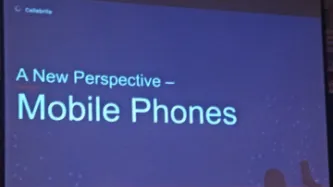
Cellebrite, a surveillance firm marketing itself as the “global leader in digital intelligence”, is marketing its digital extraction devices at a new target: authorities interrogating people seeking asylum.
Israel-based Cellebrite, a subsidiary of Japan’s Sun Corporation, markets forensic tools which empower authorities to bypass passwords on digital devices, allowing them to download, analyse, and visualise data.
Its products are in wide use across the world: a 2019 marketing…

Content type: Advocacy
UPDATE 13 February: Facebook announced that it would open up its Ad Archive API next month. Read Mozilla's statement about the response here.
On 11 February 2019, Privacy International joined Mozilla and 36 organisations in an open letter to Facebook call on Facebook to make good on its commitments to provide more transparency around political advertising ahead of the 2019 EU Parliamentary Elections.
Specifically, our open letter urges Facebook to:
Roll out a functional, open Ad…

Content type: News & Analysis
Privacy International welcomes the judgment of the European Court of Human Rights in Catt v the United Kingdom.The Court found that the UK violated the right to privacy (Article 8 of the European Convention on Human Rights) of Mr John Catt, a peace movement activist, who despite having never being convicted of any offence, had his name and other personal data included in a police database known as the “Extremism Database”. The Court found problematic "the variety of definitions of…

Content type: News & Analysis
On 22 January 2019 Google updated its Terms of Service and Privacy Policy for Europe.
The message is quite reassuring:
“Nothing about your experience in Google services will change. And nothing is changing in terms of your privacy settings, the way your data is processed, nor the purposes of its processing”.
Then it says: “However, if you don’t want to accept these changes in our terms and Privacy Policy, you can choose to stop using the applicable services.”
Simple. If you don’t like it,…

Content type: News & Analysis
We found this image here.
In order for GDPR to be effective at protecting people's data, it must be implemented and enforced. Therefore, we are pleased to see that CNIL has taken action and issued Google a fine of €50 million based on complaints by NOYB and La Quadrature Du Net in May 2018. Despite numerous statements by Google that it takes the protection of people's data seriously, the decision demonstrates that they have a long way to go and that regulators will take action to hold…
Content type: News & Analysis
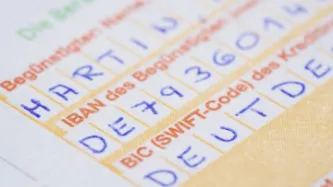
At its last session on November 21st and 22nd 2006, the Article 29 Working Party has again been dealing with the SWIFT case and has unanimously adopted Opinion 128 on its findings in this case.
In this Opinion, the Article 29 Working Party emphasizes that even in the fight against terrorism and crime fundamental rights must remain guaranteed. The Article 29 Working Party insists therefore on the respect of global data protection principles.
SWIFT is a worldwide financial messaging service…
Content type: News & Analysis
Dear Mr Schrank,
I am writing with regard to the current controversy over the private arrangement between SWIFT and the U.S. Government that facilitates the extradition of confidential financial transaction data from SWIFT to U.S. authorities. You will be aware that Privacy International contends that this arrangement breaches privacy and data protection law, and we have lodged complaints with regulatory authorities in 38 countries.
In my many discussions with SWIFT officials over the past…