
Search
Content type: Examples
A study describes the data transmitted to backend servers by the Google/Apple based contact tracing (GAEN) apps in use in Germany, Italy, Switzerland, Austria, and Denmark and finds that the health authority client apps are generally well-behaved from a privacy point of view, although the Irish, Polish, Danish, and Latvian apps could be improved in this respect. However, the study also finds that the Google Play Services component of the apps contacts Google servers as often as every 20 minutes…
Content type: Examples
On March 24 the German Bundestag passed a comprehensive amendment to the Infection Protection Act that authorises the Federal Ministry of Health to implement measures for medical care without the consent of the Federal Council. These include the ability to impose curfews and travel restrictions, override patent protection for medical products, and issue ordinances creating other exceptions to the law. The Federal Data Protection Commissioner criticised the proposals because he doubted whether…
Content type: Examples
A review of European privacy laws considers whether the tracking and monitoring methods China used to shut down the COVID-19 epidemic are in compliance with GDPR. The French data protection authority CNIL says employers are not allowed to take mandatory temperature readings from employees or visitors or require them to fill out compulsory medical questionnaires. Italy passed emergency legislation requiring anyone who has recently stayed in an at-risk area to notify health authorities. Germany…

Content type: News & Analysis
The first half of 2018 saw two major privacy moments: in March, the Facebook/ Cambridge Analytica scandal broke, followed in May by the EU General Data Protection Regulation ("GDPR") taking effect. The Cambridge Analytica scandal, as it has become known, grabbed the attention and outrage of the media, the public, parliamentarians and regulators around the world - demonstrating that yes, people do care about violations of their privacy and abuse of power. This scandal has been one of…
Content type: Advocacy
Privacy International welcomes the effort by the Government of India to reaffirm its commitment to upholding and respecting the right to privacy, and for noting the need to regulate the processing of personal data as essential for the protection of privacy through the adoption of a data protection law.
The urgent need for this legislation has been validated in the Supreme Court decision regarding the Aadhaar Act, which stipulates the need for a robust data protection regime. …

Content type: Advocacy
India has been leading at developing some of the most complex and intense data-intensive systems in the world as exemplified with their mass biometric identification system, known as Aadhaar, as well as in the development and design of new technologies. To find out more about the main privacy issues in India, check out the State of Privacy in India.
And yet, India does not have a comprehensive privacy legislation and only limited data protection standards can be found under section 43A and…
Content type: Long Read
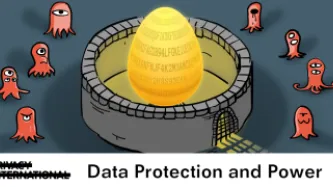
To celebrate International Data Privacy Day (28 January), PI and its International Network have shared a full week of stories and research, exploring how countries are addressing data governance in light of innovations in technology and policy, and implications for the security and privacy of individuals.
At the core of data protection debates, there is a power play between empowering individuals to control their data and empowering those who use (or want to) use their data.
By…

Content type: Report
Financial services are changing, with technology being a key driver. It is affecting the nature of financial services, from credit and lending through to insurance, and even the future of money itself.
The field of fintech is where the attention and investment is flowing. Within it, new sources of data are being used by existing institutions and new entrants. They are using new forms of data analysis.
These changes are significant to this sector and the lives of people it serves. This…
Content type: News & Analysis
Below is an excerpt of an article that recently appeared on Slate, written by our partner Kevin Donovon, a researcher at the University of Cape Town, and Carly Nyst, Head of International Advocacy at Privacy International:
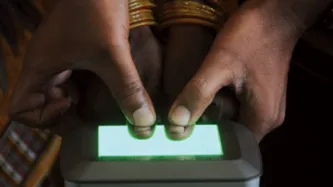
"Move over, mobile phones. There’s a new technological fix for poverty: biometric identification. Speaking at the World Bank on April 24, Nandan Nilekani, director of India’s universal identification scheme, promised that the project will be “transformational.” It “uses…

Content type: News & Analysis
Last evening (in India, that is) we got some very good news. Earlier, an online news item in a major newsmagazine described a forthcoming report from the Parliamentary Standing Committee on Finance, a cross-party body created to study Bills being presented for consideration in Parliament, as having expressed its reservations about the NIAI Bill, that they would recommend recasting it. The NIAI Bill seeks to set up a National Information Authority, whose job is to take over the functioning of…