
Search
Content type: Examples
The Argentinian startup Nippy offers delivery drivers access to rest stops including free coffee, phone charging stations, and toilets in return for downloading its app and allowing it to sell the data the app collects to partners in insurance, financial services, and telecommunications. The result is to give companies like Mastercard and Movistar insight into gig workers' income in the areas where Nippy operates in Argentina, Mexico, and the Dominican Republic. The services Nippy's rest stops…

Content type: Advocacy
Dejusticia, Fundación Karisma, and Privacy International submitted a joint stakeholder report on Colombia to the 44th session of the Universal Periodic Review at the UN Human Rights Council.Our submission raised concerns regarding the protection of the rights to freedom of expression and opinion, to privacy, and to personal data protection; the shutdown of civil society spaces; protection of the right to protest; and protection of the rights of the Venezuelan migrant and refugee population.…

Content type: Advocacy
Privacy International responded to the consultation on the proposed data protection bill (the "Bill") to reform the current law 25.326
We welcome the continued efforts by Argentina to provide protections for the right to privacy, already enshrined in the Constitution of Argentina. PI welcomes the main objective of the Bill, namely to regulate the processing of personal data in order to guarantee fully the exercise of data subjects’ rights in accordance with Article 43 of the Constitution (…

Content type: Long Read
This piece was written by Joan López, researcher at Fundación Karisma, and originally posted on their website.
The uncertainty of this crisis has become an opportunity for the implementation of technological solutions to complex issues instead of coherent decision-making processes. During the social and economic crisis caused by Covid-19, the National Development Office (DNP in Spanish) in Colombia, in just two weeks, set up an unconditional cash transfer system for 3 million citizens. The…
Content type: Examples
Dejusticia, Colombia-based research and advocacy organisation, delivered a series of recommendations to the Ministry of Health and Social Protection to be taken into account when issuing the next decree on vaccination against Covid-19.
Their recommendations include:
Adding the principle of non-discrimination to the plan to be proposed;
Requesting that the population deprived of liberty be vaccinated sooner than proposed to ensure they are detained in decent conditions;
Ensuring the…
Content type: Examples
Corruption scandals have added to Latin America’s challenges in dealing with the coronavirus. In Ecuador, prosecutors identified a criminal ring that colluded with health officials to sell body bags to hospitals at 13 times the normal price, and many others are accused of price-gouging for other medical supplies.
The former Bolivian health minister is under house arrest awaiting trial on corruption charges, government officials in seven Brazilian states are under investigation for misusing…
Content type: Examples
An audit of two apps and a website used by national and local governments in Colombia finds: an absence of public information about the tools, how they work, or how their security and privacy is protected; non-compliance with Colombia’s data protection legal framework, particularly in the area of consent; and reckless deployment of solutions that put hundreds of thousands of users’ personal data at risk. Fundación Karisma, which conducted the audit, makes a number of recommendations for…
Content type: Examples
Human Rights Watch reports that drug cartels and rebel groups are imposing their own lockdowns in rural areas of Colombia and using WhatsApp chats and pamphlets to advise local residents of curfew hours, transport shutdowns, and other bans that are far more strict than those imposed by the government. They have murdered at least eight civilians. In some areas, violent gangs are preventing people from leaving their homes at all, in two provinces armed groups have punished violators by torching…
Content type: Examples
Colombia will adopt the Apple-Google contact tracing platform after finding it necessary to remove the contact tracing functions from CoronApp, the official Colombian coronavirus information app because they didn’t work. CoronApp was downloaded by 4.3 million people, and includes features to report symptoms and locate cases on a map. The contact tracing features, which were supposed to be able to overcome the limitations of the iPhone’s Bluetooth implementation, were provided by the Portuguese…
Content type: Video
The incorporation of new technologies to electoral processes is a phenomenon with a global and exponential growth. Despite its benefits, online campaigning is not without challenges, and can pose threats to transparency and equity in electoral competition. Given the role of elections as foundational pillars of the democratic system and a key gateway for the exercise of fundamental civil rights, these implications must be assessed with care and through specific tools.
We at PI, together…
Content type: Examples
Our partners from Karisma in Colombia analysed three different technological solutions intending to deal with the COVID-19 pandemic, finding vulnerabilities in them (in Spanish).
Link: https://web.karisma.org.co/que-sabemos-de-las-tres-herramientas-que-se-anuncian-como-soluciones-tecnologicas-para-el-manejo-del-covid-19/
Content type: Examples
Civil Society advocates, including PI, expressed their dissaproval of a letter from the Colombian Data Protection Authority, which was intending to give a blank exception to the government in relation with handling the pandemic.
Link (in Spanish): https://web.karisma.org.co/organizaciones-de-la-sociedad-civil-rechazan-circular-de-la-sic-sobre-uso-de-datos-personales-para-controlar-la-pandemia/
Content type: Examples
The former Big Brother reality TV star Matías Schrank was arrested by the Cybercrime division of the Misiones provincial police, after publishing tweets that claimed that Eduardo Rovira, the president of the Misiones legislature, had contracted COVID-19 on his recent trip to Thailand and was reckless in not immediately going into quarantine but continuing to hold meetings with other high-level government officials. Schrank was charged under Article. 211 of the Criminal Code, which…
Content type: Examples
The Argentinian company Urbetrack is developing a "Cuidate en casa" (Take Care of Yourself at Home) app that it will pitch to government agencies throughout the country. The goal is to contribute to remediating the health crisis by helping enforce quarantine. The plan is that users will download the app and complete a form with their personal details as chosen by the local authority. The app will then generate a "radial geofence" defined by the local authority, within which the user must stay.…
Content type: Examples
The Argentinian Ministry of Transport, working with the state-owned satellite company ARSAT and the telecoms regulator,ENACOM, proposed to the Executive on 31 March 2020 a platform that uses cell tower data to track people on public transport and ensure they comply with quarantine laws. By 28 March, the Ministry of Security had detained 13,006 people for violating the rules. The government believes that although compliance is high, it will deteriorate if quarantine is extended much longer…
Content type: Examples
The San Francisco-based big data company Grandata has created a heat map to show which areas of Argentina are best complying with the quarantine lockdown. Grandata used an "anonymised" dataset collected from apps that provide third parties with geolocation information. The heat map shows if an individual has moved more than 100 meters from the place where they spend most of their time, apparently without taking into account the socio-economic contexts of different cities, where individuals…
Content type: Examples
Argentina's Public Prosecutor's Office will start installing an app on the smartphones of those who violate government-ordered quarantine in the cities of Santa Fé and Rosario. The app will be installed by the province's Criminal Investigation Agency to track those who are under criminal investigation for violating quarantine. The app will send reports to the the MPA investigation office and coordinated by the Attorney General's Office. Individuals will be required to sign a document…
Content type: Examples
On March 23, Argentina's immigration agency, Dirección Nacional de Migraciones (DNM), announced that anyone arriving in the country would be required to install the free COVID-19 Ministry of Health app on their phone for 14 days to ensure they comply with quarantine rules in order to protect the population. The Office of the Chief of Staff had instructed the DNM to adopt this policy when it launched the app, also on March 23. Since launch, the number of unnecessary permissions the app requests…
Content type: Examples
The self-testing web app issued by Argentina's Secretariat of Public Innovation asks for national ID number, email and phone as mandatory fields in order to submit the test. The Android version requires numerous permissions: calendar, contacts, geolocation data (both network-based and GPS), microphone, camera, full network access; change audio settings, run at startup; draw over other apps, prevent device from sleeping.
Sources:
https://www.argentina.gob.ar/coronavirus/app
https://play.…
Content type: Examples
The free app Testeate, developed by the company Adrómeda in collaboration with the Association of Information and Communication Technologies of Mar del Plata (ATICMA) and the Chamber of Software and Computer Services Companies of Argentina (CESSI) and launched in the Municipality of General Pueyrredón on March 26, is intended to enable direct information exchange between Argentina's National Ministry of Health and the population by offering constantly updated information in any city and…
Content type: Examples
Colombia's has launched the free, Android-only, prevention-focused Colombia-Coronapp developed by the National Health Institute (INS) to help identify and eradicate the virus across the country, as well provide centralisation and transparency. Besides their basic information, users are asked to say if they have participated in any mass events in the prior eight days, a controversial question because of the recent protests across the country. The app also provides safety tips, an updated map of…
Content type: Examples
A group of independent developers in Argentina started CoTrack, a public crowdsourced effort to develop an app to track and slow the spread of the virus. CoTrack registers each user's geographic movements and looks for times when they are close to people who have been diagnosed with COVID-19. When there is a confirmed case, a user who has the app can share their data with the community so others can automatically be notified that they should take precautions. The Ministry of Health for the area…
Content type: Examples
An Argentinian crowdsourcing website is collecting information on flights with passengers who were reported as testing positive for COVID-19. Users are asked to enter their email address and the date, airline, and flight number, and tick a box to indicate that someone on their flight was infected. No information is provided on who operates the site, but the terms and conditions indicate that it uses open data flows alongside the collected data.
Source: http://www.checkmyvirusrisk.com/CO/…
Content type: Long Read
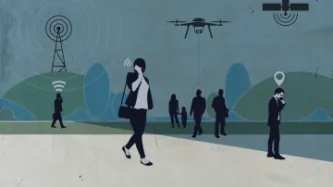
The Privacy International Network is celebrating Data Privacy Week, where we’ll be talking about how trends in surveillance and data exploitation are increasingly affecting our right to privacy. Join the conversation on Twitter using #dataprivacyweek.
In the era of smart cities, the gap between the internet and the so-called physical world is closing. Gone are the days, when the internet was limited to your activities behind a desktop screen, when nobody knew you were a dog.
Today, the…

Content type: State of Privacy
Table of contents
Introduction
Right to Privacy
Communication Surveillance
Data Protection
Identification Schemes
Policies and Sectoral Initiatives
Introduction
Acknowledgement
The State of Privacy in Colombia is the result of an ongoing collaboration by Privacy International and Fundación Karisma and Dejusticia.
Key Privacy Facts
1. Constitutional privacy protection: The constitution contains an explicit protection of the right to privacy (Article 15 of the 1991 constitution).
2…

Content type: State of Privacy
Table of contents
Introduction
Right to Privacy
Communication Surveillance
Data Protection
Identification Schemes
Policies and Sectoral Initiatives
Introduction
Acknowledgement
The State of Privacy in Argentina is the result of an ongoing collaboration by Privacy International and Asociación por los Derechos Civiles (ADC).
Key Privacy Facts
1. Constitutional privacy protections: While Argentina's constitution does not mention the word 'privacy', Section 19 has been taken by the…
Content type: Advocacy
In September 2018, the National Executive sent the proposed Data Protection Bill to the National Congress. The proposed law was directed to the Senate and it will be considered by two commissions: the Commission of Constitutional Affairs (Comision de Asuntos Constitucionales) and the Commission of Rights and Guarantees (Comision de Derechos y Garantías).
Privacy International welcomes the continued efforts by Argentina to provide protections for the right to privacy, already enshrined in the…

Content type: News & Analysis
Creative Commons Photo Credit: Source
In September 2018, a month after Argentina lawmakers voted against the legalisation of abortion, we spoke to Eduardo Ferreyra from the Buenos Aires-based Asociacion por los Derechos Civiles about the role of privacy in the abortion debate. Also joining us in this second episode of the Gender and Privacy Series is Ambika Tandon from the Centre for Internet and Society in India to discuss the intersection between privacy and bodily autonomy.…

Content type: News & Analysis
Image attribution: By Blue Diamond Gallery CC BY-SA 3.0.
In March 2017, when the UN Human Rights Council requested the High Commissioner for Human Rights to prepare a report on the right to privacy in the digital age, including the responsibility of business enterprises, Cambridge Analytica was an obscure company among others. A year later the data exploitation scandal erupted, leading to plenty of soul searching by politicians in US, UK, Europe and elsewhere, pledges of…
Content type: Advocacy
Tanto la privacidad como la seguridad son esenciales para proteger a los individuos, su autonomía y su dignidad. El detrimento de la privacidad implica el detrimento de la seguridad de los individuos, sus dispositivos y la infraestructura de la que forman parte. La gente necesita privacidad para sentirse libremente segura y proteger su información, así como para gozar plenamente de otros derechos.
Una cantidad cada vez mayor de Gobiernos en el mundo está recurriendo también al hackeo para…