
Search

Content type: Examples
The Sunday edition of the national newspaper Bild reported that Chancellor Angela Merkel's conservative Christian Democrats (CDU) party and the centre-right Free Democrats (FDP) party purchased "more than a billion" pieces of personal data about potential voters from a subsidiary of Deutsche Post, which offered target-mailing concepts to its clients. The Deutsche Post subsidiary, Deutsche Post Direkt, rejected these claims.
Instead, Deutsche Post is reported as insisting that it never…

Content type: Advocacy
In December 2018, PI responded to the UK Information Commissioner's (ICO) Call for Views on a Code of Practice for the use of personal information in political campaigns.
The consultation followed on from the ICO's policy report Democracy Disrupted?, published in July 2018, which recommended that the Government should legislate at the earliest opportunity to introduce a statutory Code of Practice under the Data Protection Act 2018 for the use of personal information in campaigns.…

Content type: News & Analysis
This piece was first published in GDPR today in March 2019.
Elections, referendums and political campaigns around the world are becoming ever more sophisticated data operations. This raises questions about the political use and abuse of personal data. With the European Union elections fast approaching and numerous national and local elections taking place across EU Member States, it is essential that the legal frameworks intended to protect our personal data do just that.
Member State…

Content type: Advocacy
This week a public debate on facial recognition will take place in Westminster Hall.
Following a public request for comment by Darren Jones MP (Science and Technology Committee), we sent our responses to the questions asked.
Below you can find the integral content of our letter.
1. Would you consent to the police scanning your face in a crowd to check you’re not a criminal?
Facial recognition technology uses cameras with software to match live footage of people in public with…

Content type: Examples
On January 9, 2019 the UK Information Commissioner's Office fined SCL Elections, also known as Cambridge Analytica, £15,000 for failure to comply with an enforcement notice the ICO issued in May 2018 ordering the company to respond in full to a subject access request submitted by US-based academic David Carroll. The company was also required to pay £6,000 in costs and a victim surcharge of £170. Information Commissioner Elizabeth Denham noted that UK data protection laws apply to all data…

Content type: Examples
Despite Facebook's October 2018 rules intended to provide greater transparency about political ads, the sources of funding for UK political ads remained obscure in early 2019. when a network of hard-Brexit and people's vote campaigning groups spent more than £1 million on Facebook ads in the lead-up to the crucial Parliamentary vote. For a week in January 2019, the biggest UK political advertiser on the service was Britain's Future, an obscure pro-Brexit group that spent £31,000 in that single…

Content type: Examples
The results of a year-long review issued by the UK Information Commissioner's Office in November 2018 uncovered a "disturbing disregard for voters' personal privacy" on the part of 30 organisations, including social media platforms, political parties, data brokers, and credit reference agencies. Based on information uncovered during the investigation, the ICO sent 11 warning letters requiring action by the main political parties, and announced its intention to conduct audits; issued an…

Content type: Examples
In 2019, a prominent page on the Facebook Business site cited the British Conservative Party as a "success story" at the 2015 general election, which put the party into power with a narrow majority. The site boasted that via Facebook the Conservatives had an 80.6% reach in key constituencies, 3.5 million video views, and a social context for 86.9% of all the ads served - and that as a result the party had defied the polls and achieved an outright majority.
https://en-gb.facebook.com/business/…

Content type: Examples
In November 2018, the UK government announced that 11 local authorities across England would participate in Voter ID pilots in the interest of gaining "further insight into how best to ensure the security of the voting process and reduce the risk of voter fraud". Five local authorities participated in pilots in the 2017 general election. The new pilots will test four models of identification checks: photo ID (Pendle, East Staffordshire, Woking), photo and non-photo ID (Ribble Valley, Broxtowe,…

Content type: Long Read
(In order to click the hyperlinks in the explainer below, please download the pdf version at the bottom of the page).
Content type: Long Read
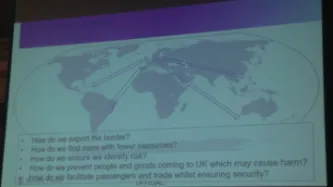
The UK border authority is using money ring-fenced for aid to train, finance, and provide equipment to foreign border control agencies in a bid to “export the border” to countries around the world.
Under the UK Border Force’s “Project Hunter”, the agency works with foreign security authorities to bolster their “border intelligence and targeting” capabilities with UK know-how and equipment.
As well as the provision of equipment and training, the Border Force is also advising countries on…

Content type: Long Read
(In order to click the hyperlinks in the explainer below, please download the pdf version at the bottom of the page).

Content type: Long Read
(In order to click the hyperlinks in the explainer below, please download the pdf version at the bottom of the page).

Content type: Long Read
(In order to click the hyperlinks in the explainer below, please download the pdf version at the bottom of the page).

Content type: Long Read
(In order to click the hyperlinks in the explainer below, please download the pdf version at the bottom of the page).

Content type: Advocacy
In October 2018, Privacy International submitted to the public consultation on the “Consolidated Guidance to Intelligence Officers and Service Personnel on the Detention and Interviewing of Detainees Overseas, and on the Passing and Receipt of Intelligence Relating to Detainees” (“Consolidated Guidance”) held by the Investigatory Powers Commissioner’s Office (“IPCO”).Privacy International’s submission addresses the portions of the Consolidated Guidance on “the Passing and Receipt…

Content type: Long Read
(In order to click the hyperlinks in the explainer below, please download the pdf version at the bottom of the page).
Content type: News & Analysis
Privacy International welcomes the focus on data and privacy contained in the final report by the UK House of Commons Digital, Culture, Media and Sport Committee (DCMS) on Disinformation and ‘fake news’. Beyond our control, companies and political parties have banded together to exploit our data. This report establishes essential steps to remedying this downward spiral. An important part of the democratic process is freedom of expression and right to political participation, including the right…

Content type: Long Read

Content type: Long Read
UPDATED 11TH JUNE 2019: We've just launched our campaign, and you can now write to your local PCC easily using the online portal we have created with Liberty.
(In order to click the hyperlinks in the explainer below, please download the pdf version at the bottom of the page).

Content type: Examples
A flaw in the official 2018 UK Conservative Party conference app granted both read and write access to the private data of senior party members, including cabinet ministers, to anyone who logged in by second-guessing the email address they used to sign into the app. Twitter users claimed that one leading politician, Boris Johnson, had his avatar briefly replaced by a pornographic image, while another, Michael Gove, had his replaced by that of media magnate Rupert Murdoch. The app was…

Content type: Long Read
The Privacy International Network is celebrating Data Privacy Week, where we’ll be talking about how trends in surveillance and data exploitation are increasingly affecting our right to privacy. Join the conversation on Twitter using #dataprivacyweek.
In the era of smart cities, the gap between the internet and the so-called physical world is closing. Gone are the days, when the internet was limited to your activities behind a desktop screen, when nobody knew you were a dog.
Today, the…

Content type: News & Analysis
Privacy International welcomes the judgment of the European Court of Human Rights in Catt v the United Kingdom.The Court found that the UK violated the right to privacy (Article 8 of the European Convention on Human Rights) of Mr John Catt, a peace movement activist, who despite having never being convicted of any offence, had his name and other personal data included in a police database known as the “Extremism Database”. The Court found problematic "the variety of definitions of…

Content type: Examples
In November 2018, the UK government announced it would pilot voter ID for in 11 local authorities during thte 2019 local elections in order to gain insight into ensuring voting security and lowering the risk of voter fraud. The Cabinet Office deemed the pilots conducted in five local authorities during the 2018 local elections to be a success. Four models of checking are under consideration: photo ID (Pendle, East Staffordshire, Woking); one photo or up to two non-photo IDs (Ribble Valley,…

Content type: Examples
A database compiled through investigations conducted in 2018 by the Guardian and the Undercover Research Group network of activists shows that undercover police officers spied on 124 left-wing activist groups between 1970 and 2007. The police infiltrated 24 officers over that time within the Socialist Workers Party, which, with a membership of a few thousand, advocates revolution to ablish capitalism. Four of these undercover officers began sexual relationships with deceived female members, and…

Content type: Examples
In 2018, after the UK Cabinet Office said a trial of compulsory voter ID was necessary because reports of voter fraud had more than doubled between the 2014 and 2016 elections - a claim immediately disputed by a voter and upheld by the UK Statistics Authority. While it was true that there were 21 reports in 2014 and 44 in 2016, the number fell to 28 in 2017, small numbers to begin with. Crucially, more than twice as many people voted in 2016, the year of the EU referendum. None of the five…

Content type: Examples
In 2018 a report from the Royal United Services Institute found that UK police were testing automated facial recognition, crime location prediction, and decision-making systems but offering little transparency in evaluating them. An automated facial recognition system trialled by the South Wales Police incorrectly identified 2,279 of 2,470 potential matches. In London, where the Metropolitan Police used facial recognition systems at the Notting Hill Carnival, in 2017 the system was wrong 98% of…

Content type: Examples
In October 2018, in the wake of the Cambridge Analytica scandal and questions over Facebook's influence on the UK's EU referendum, Facebook announced it would add Britain to the US and Brazil on the list of countries where the company will no longer allow political groups to publish "dark" ads on its network. Among the changes: all paid-for political content will be automatically published in a public library for up to seven years; individuals and organisations running ads with political…

Content type: Long Read
As our four year battle against the UK government’s extraordinarily broad and intrusive hacking powers goes to the Supreme Court, we are launching a new fundraising appeal in partnership with CrowdJustice.
We are seeking to raise £5k towards our costs and need your help. If we lose, the court may order us to pay for the government’s very expensive army of lawyers. Any donation you make, large or small, will help us both pursue this important case and protect the future ability of…

Content type: Examples
Police in the German state of Hesse are using a bespoke version of Palantir's Gotham software system, specially adapted for the police force. Palantir CEO Alex Karp sits on the board of the German mega publisher Axel Springer.
Publication: WorldCrunch, Jannis Brühl
Date: 20 November 2018