
Search

Content type: News & Analysis
Also available in English.A Relatora Especial da ONU sobre o Direito à Educação publicou seu relatório sobre liberdade acadêmica - que, entre outras coisas, recomenda que os Estados banam as tecnologias de reconhecimento facial das instituições educacionais.O sistema educacional do Brasil, que se baseia no valor fundamental “o melhor interesse da criança” é um dos piores infratores do mundo. Até o momento, 1.667 escolas só no estado do Paraná adotaram uma tecnologia que, segundo o principal…
Content type: News & Analysis
Também disponível em portuguêsThe UN Special Rapporteur on the right to education published her report on academic freedom, which recommends that states ban facial recognition technologies from educational institutions.Brazil’s educational system - which is built on the fundamental value: the best interest of the child, is one of the world’s worst offenders. So far 1,667 schools in the state of Paraná alone have adopted a technology that the UN’s leading expert believes threatens student’s…
Content type: Examples
Human Rights Watch called on the national government of Brazil to amend the country's data protection law to add new safeguards to protect children online following the discovery that seven educational webistes directed at Brazilian students, including two created by state education secretariats, used tracking developed for advertising purposes to surveil children, harvested their personal data, and sent it to third-party companies. The websites watched children in their online classrooms and…
Content type: Examples
Following a report from Human Rights Watch, The Public Ministry of São Paolo began an investigation to find out whether government education platforms and services collected students' personal data and sent it to adtech companies in violation of the General Data Protection Law. Article: São Paolo ministry investigates education websites for dataveillance Publication: G1Writer: Arthur Stabile
Content type: Examples
Education experts and publishers in Brazil are warning of the negative consequences of a decision by the São Paolo state government to replace textbooks with ebooks for students over 14 starting in 2024. Many students have no Internet access, and publishers argue it will irreparably damage the testbook industry.Article: Brazilian educators oppose ebook replacement for textbooks Publication: Phys.org Writer: Phys.org
Content type: Examples
After an in-person auction in São João let Brazilian technology companies bid for a contract to supply facial recognition technology to the public school system. PontoID, which won the $162,000 contract, began secretly rolling out the technology without informing parents or students in advance. The goal was to help track school attendance; parents would receive a text message when students arrive and leave school. In some towns, more than 80% of the population are of African descent; facial…

Content type: News & Analysis
This blog post by Coding Rights was originally published in Portuguese at: https://tinyurl.com/mediumcodingrightsTransID. It was written by Mariah Rafaela Silva and Joana Varon and translated by Erly Guedes. Illustration was produced by Clarote.On the International Transgender Day of Visibility, Mariah Rafaela Silva and Joana Varon authors of the report “Facial recognition in the public sector and trans identities: techno-politics of control, surveillance and threats to gender diversity…
Content type: Examples
Corruption scandals have added to Latin America’s challenges in dealing with the coronavirus. In Ecuador, prosecutors identified a criminal ring that colluded with health officials to sell body bags to hospitals at 13 times the normal price, and many others are accused of price-gouging for other medical supplies.
The former Bolivian health minister is under house arrest awaiting trial on corruption charges, government officials in seven Brazilian states are under investigation for misusing…
Content type: Examples
Brazil’s Federal Supreme Court has struck down a government order forcing telecommunications companies to provide access to the user information relating to the country’s 200 million citizens to enable the government to conduct phone interviews to determine the economic response to the COVID-19 pandemic. In the process, the ruling established that data protection is a fundamental right. However, privacy advocates warned that the lack of established data protection law in the country opened the…
Content type: Examples
As the mounting infection numbers and deaths took Brazil to second-worst affected in the world, the country took down the website on which it had been publishing daily, weekly, and monthly figures non infections and deaths in Braziliant states. A newspaper that supports president Jair Bolsonaro implied that some states were exaggerating the toll, and a council of state health secretaries said it would fight the changes. Two days later, the country restored the site after the Supreme Court…
Content type: Examples
Brazilian supreme court judge Alexandre de Moraes ordered Jair Bolsonaro’s administration to resume publishing complete COVID-19 statistics. The government had purged the health ministry website of historical pandemic-related data and said it would stop publishing the cumulative death toll and number of infections in order to “refine” the official data. Independent media estimated the tally at 37,312 deaths and 710,8987 infections; Bolsonaro accused the media of creating a panic.
https://www.…
Content type: Examples
INTERNETLAB offers an extensive analysis of all the eight different Covid-19 related apps being discussed in Brazil at the moment. Apps were rated according to four parameters: consent, need, transparency and security. Besides this, the organisation takes a look into what permissions which app has and analyses these permissions in light of what the apps promise to deliver.
Writer: Alessandra Gomes, Maria Luciano, Nathalie Fragoso e Victor Pavarin
Publication: INTERNETLAB
…
Content type: Examples
Our partners from Coding Rights in Brazil analysed 18 different Bills introduced to the Congress to deal with the COVID-19 pandemic (in Portuguese).
Link: https://www.codingrights.org/radar-legislativo-especial-covid-19-e-tecnologia/
Content type: Examples
Our partners from Internet Lab in Brazil started a series of podcasts to discuss the impacts of COVID-19 in the country. They are all recorded and available in the website (in Portuguese).
Link: https://www.internetlab.org.br/pt/noticias/antivirus-um-programa-para-discutir-a-tecnologia-direitos-e-a-pandemia/
Content type: Examples
North Macedonia is the first country in the Western Balkans to launch a contact-tracing app. The government has stressed that the Bluetooth-based app, StopKorona!, complies with all legal privacy requirements. The app follows a decentralised design, so that users maintain full control over their data, which is deleted after 14 days; if they test positive for the virus they can choose to send their location history to the Ministry of Health so that their contacts can be alerted. The app was…
Content type: Examples
The Rio de Janeiro City Hall has signed an agreement with telecomunications company TIM to use geolocation data to develop "heat maps" by cross-referencing epidemological hubs with high population density locations. Under the agreement, TIM will pinpoint the movement of its users across Rio de Janeiro through antennae-facilitated geolocation triangulation and send it online to the local government to enable it to monitor whether individuals are complying with isolation measures and assess…
Content type: Examples
In February 2019, the city of Rio de Janeiro announced that its police security operation for the annual five-day Carnival would include facial recognition and vehicle license plate cameras to identify wanted individuals and cars. Municipal officials said the system would help reduce thefts and robberies; critics dissented on the basis that a period when people are wearing masks, heavy makeup, glitter, and costumes is a bad time to test the technology.
https://riotimesonline.com/brazil-news/…

Content type: News & Analysis
Creative Commons Photo Credit: Source
In the third episode of the Gender and Privacy Series, we talk about sex and privacy with two female activists: Sarah Jamie Lewis, an expert on the security of internet-connected sex toys, and Joana Varon, founder of the female-led Brazilian NGO Coding Rights.
Listen to the podcast here.

Content type: Long Read
During the last World Economic Forum in Davos, the CEO of Microsoft joined the chorus of voices calling for new global privacy rules, saying the following in regard to the new European General Data Protection Regulation (GDPR):
“My own point of view is that it's a fantastic start in treating privacy as a human right. I hope that in the United States we do something similar, and that the world converges on a common standard."
We have come a long way. From tech companies fighting and…

Content type: State of Privacy
Table of contents
Introduction
Right to Privacy
Communication Surveillance
Data Protection
Identification Schemes
Policies and Sectoral Initiatives
Introduction
Acknowledgement
The State of Privacy in Brazil is the result of an ongoing collaboration by Privacy International and Coding Rights.
Between 2014-2017, Privacy LatAm contributed to previous versions of this briefing.
Key privacy facts
1. Constitutional privacy protection: The constitution contains an explicit…

Content type: News & Analysis
This month Brazil adopted a new data protection law, joining the ranks of more than 120 countries which have adopted such legislation, providing individuals with rights against the exploitation of their personal data. But after a veto from the Brazilian president, the law lacks an independent authority in charge of its application, which can severely undermine its impact.
When drafting data protection bills, one of the most important and often politically contentious issue tends to be their…
Content type: Long Read
To celebrate Data Privacy Week, we spent the week discussing privacy and issues related to control, data protection, surveillance, and identity. Join the conversation on Twitter using #dataprivacyweek.
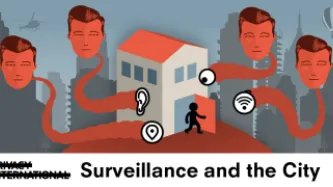
Do you live in a “smart city”? Chances are, you probably do (or at least your city claims to be). But do you know what exactly makes your city “smart”, beyond the marketing term? And what does this have to do with privacy?
Companies and governments will tell you that the more cameras, sensors…

Content type: News & Analysis
Privacy International and Metamorphosis have today written to authorities in Macedonia to provide information and call for assurances regarding government surveillance in Macedonia.
For over two years, Macedonia has endured a prolonged and severe political crisis - including wide scale protests and acts of violence against parliamentarians - following reports that the governing party had been unlawfully intercepting the phone calls of some 20,000 people, including, activists, journalists…

Content type: Advocacy
Privacy International and Metamorphosis have today written to authorities in Macedonia to provide information and call for assurances regarding government surveillance in Macedonia.
For over two years, Macedonia has endured a prolonged and severe political crisis - including wide scale protests and acts of violence against parliamentarians - following reports that the governing party had been unlawfully intercepting the phone calls of some 20,000 people, including,…

Content type: Advocacy
This stakeholder report is a submission by Privacy International (PI). PI is a human rights organisation that works to advance and promote the right to privacy and fight surveillance around the world. PI wishes to bring concerns about the protection and promotion of the right to privacy in the former Yugoslav Republic of Macedonia before the Human Rights Committee for consideration in the former Yugoslav Republic of Macedonia's upcoming review.
Content type: News & Analysis
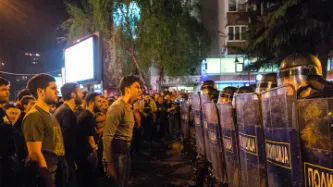
Macedonia's capital Skopje is bracing itself for another night of protests and clashes after the interim President announced on Tuesday that there will be an amnesty for everyone under investigation in a formal probe into illegal wiretapping.
The investigation into the wiretapping scandal, which was the focus of Privacy International's report released last month, Macedonia: Society on Tap, also focused on other serious crimes, including electoral fraud, blackmail and the torture of a…

Content type: Long Read
“This is my personal opinion,” concedes Branko, a taxi driver in Skopje, the Republic of Macedonia's capital. “It was done by America to stop Putin building his gas pipe line through Macedonia.”
“This is just politics,” he advises, skeptically.
It's a common reaction to the wiretapping scandal in Macedonia. Beginning in February last year when opposition leader Zoran Zaev posted a series of wiretaps online that he called 'bombs' – they seemingly showed that for years the phone calls of some…

Content type: News & Analysis
This is a guest post by Jasna Koteska. Read Privacy International's full report documenting stories of mass surveillance in Macedonia here.
What are the main similarities and differences between modern surveillance methods in Macedonia and those of the socialist period?
In all 46 years of communist Macedonia, the total official number of personal communist surveillance files is 14,572. Unofficial sources report more than 50,000 files. The number of direct 'snitches' in communist…
Content type: News & Analysis
This is a guest piece. It does not necessarily reflect the views or position of Privacy International.
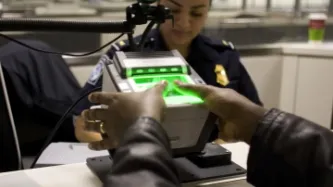
In 1997, plans for a Civil Identification Registry (RIC) were signed into law in Brazil, promising to unify the 27 regional identification registries into a centralized federal one by 2020. The law, which was only enacted in 2010, continues to face obstacles to its implementation, but in 2014 there was a renewed wave of support for the project from the Ministry of Justice…

Content type: News & Analysis
NETMundial – a global conference initiated by the Brazilian government – has produced ‘The Multi-stakeholder Statement of São Paulo’, a Roadmap and Principles on internet governance that could herald new respect for the right to privacy online. However, the outcome document fails to adequately recognise the relationship between internet governance and mass surveillance, reflecting a larger problem that was present throughout the two-day meeting.
By the end of the conference, both the…