
Search

Content type: Examples
In the lead up to the 2017 German federal election (Bundestagswahl), all political parties used social media like Facebook, Twitter, Instagram, YouTube, and e-mails as platforms to reach voters.
The far-right Alternative for Germany party (AfD) reportedly hired a Texas-based company for their campaign. Harris Media is known for their work with Republican, far-right and nationalist candidates in the US and worldwide. In 2017, Privacy International revealed that Harris Media was behind the…

Content type: Examples
In the lead up to the German elections, the conservative Christian Democratic Union (CDU) created a mobile app, Connect 17, which was designed to create a feedback loop between party headquarters and door-to-door volunteers (also known as canvassers).
The app drew on data from the federal statistics office and polling agencies. It let canvassers decide routes, record whether anyone was home, and whether a conversation had been successful. It also allowed canvassers to compare their…

Content type: Examples
The Sunday edition of the national newspaper Bild reported that Chancellor Angela Merkel's conservative Christian Democrats (CDU) party and the centre-right Free Democrats (FDP) party purchased "more than a billion" pieces of personal data about potential voters from a subsidiary of Deutsche Post, which offered target-mailing concepts to its clients. The Deutsche Post subsidiary, Deutsche Post Direkt, rejected these claims.
Instead, Deutsche Post is reported as insisting that it never…

Content type: Examples
In December 2018 reports emerged that the Indian Electoral Commission would propose amendments to the Representation of the People Act 1951 that would require citizens to link their Electoral Photo ID Card to their Aadhaar number with the stated goal of improving the accuracy of the electoral rolls. The legal change was needed because two months earlier the Indian Supreme Court had ruled that Aadhaar could only be made mandatory for welfare schemes, Permanent Account Number (PAN) cards, and…

Content type: Examples
In January 2019, Facebook announced it would extend some of the rules and transparency tools it developed for political advertising for upcoming spring elections in Nigeria, Ukraine, India, and the EU. In Nigeria, the site will bar electoral ads from advertisers outside the country where the election is being held, build a searchable library of electoral ads and retaining them for seven years, check the identity of individuals buying political ads against government-issued documents, and…

Content type: Examples
As part of the digital campaign to win re-election, in mid-2018 the BJP, which controls the Indian national government as well as that of the state of Chhattisbarh, handed out $71 million worth of free phones and subsidised data plans to 2.9 million of the state's voters and then used the phones to target prospective voters. The plan's stated purpose was to bridge the digital divide in the state, which has a population of 26 million; hundreds of cellphone towers are supposed to be added to…
Content type: State of Privacy
Table of contents
Introduction
Right to Privacy
Communication Surveillance
Data Protection
Identification Schemes
Policies and Sectoral Initiatives
Introduction
Acknowledgement
The State of Privacy in India is the result of an ongoing collaboration by Privacy International and the Centre for Internet & Society.
Key Privacy Facts
1. Constitutional privacy protections: In 2017, the Indian Supreme Court ruled that the Indian constitution guarantees a right to privacy.
2. Data…

Content type: Examples
In March 2018, Indian Congress president Rahul Gandhi tweeted that the Naramendra Modi app issued by India's ruling Bharatiya Janata Party was leaking user data. The app is intended to spearhead BJP's social media strategy in the run-up to the 2019 general elections; the party hopes to use it to mobilise 100 million BJP members and has set a target of 100,000 downloads for each district. Both privacy activists and political rivals complained that the app asks for too many permissions, is…

Content type: News & Analysis
Creative Commons Photo Credit: Source
In September 2018, a month after Argentina lawmakers voted against the legalisation of abortion, we spoke to Eduardo Ferreyra from the Buenos Aires-based Asociacion por los Derechos Civiles about the role of privacy in the abortion debate. Also joining us in this second episode of the Gender and Privacy Series is Ambika Tandon from the Centre for Internet and Society in India to discuss the intersection between privacy and bodily autonomy.…

Content type: Examples
Police in the German state of Hesse are using a bespoke version of Palantir's Gotham software system, specially adapted for the police force. Palantir CEO Alex Karp sits on the board of the German mega publisher Axel Springer.
Publication: WorldCrunch, Jannis Brühl
Date: 20 November 2018
Content type: Advocacy
Privacy International welcomes the effort by the Government of India to reaffirm its commitment to upholding and respecting the right to privacy, and for noting the need to regulate the processing of personal data as essential for the protection of privacy through the adoption of a data protection law.
The urgent need for this legislation has been validated in the Supreme Court decision regarding the Aadhaar Act, which stipulates the need for a robust data protection regime. …

Content type: Long Read
Image attribution: By Legaleagle86 at en.wikipedia, CC BY-SA 3.0.
In a long-anticipated judgment, the Indian Supreme Court has ruled that India's controversial identification system Aadhaar is Constitutional. They based their conclusion on notes that there are sufficient measures in place to protect data, and that it is difficult to undertake surveillance of citizens on the basis of Aadhaar.
But there is some good in this ruling. The court has demanded that the Government introduce…


Content type: Advocacy
India has been leading at developing some of the most complex and intense data-intensive systems in the world as exemplified with their mass biometric identification system, known as Aadhaar, as well as in the development and design of new technologies. To find out more about the main privacy issues in India, check out the State of Privacy in India.
And yet, India does not have a comprehensive privacy legislation and only limited data protection standards can be found under section 43A and…
Content type: News & Analysis
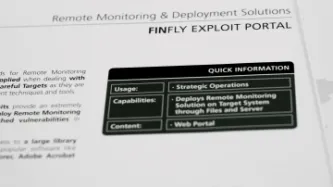
Private surveillance companies selling some of the most intrusive surveillance systems available today are in the business of purchasing security vulnerabilities of widely-used software, and bundling it together with their own intrusion products to provide their customers unprecedented access to a target’s computer and phone.
It's been known for some time that governments, usually at a pricey sum, purchase such exploits, known as zero- and one-day exploits, from security researchers to…
Content type: Long Read
To celebrate International Data Privacy Day (28 January), PI and its International Network have shared a full week of stories and research, exploring how countries are addressing data governance in light of innovations in technology and policy, and implications for the security and privacy of individuals.
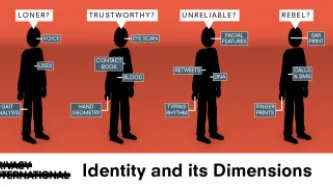
According to the World Bank, identity “provides a foundation for other rights and gives a voice to the voiceless”. The UN Deputy Secretary-General has called it a tool for “advancing…

Content type: Long Read
To celebrate International Data Privacy Day (28 January), PI and its International Network have shared a full week of stories and research, exploring how countries are addressing data governance in light of innovations in technology and policy, and implications for the security and privacy of individuals.
At the core of data protection debates, there is a power play between empowering individuals to control their data and empowering those who use (or want to) use their data.
By…

Content type: Examples
In 2017, a website run by the Jharkhand Directorate of Social Security leaked the personal details of over.1 million Aadhaar subscribers, most of them old age pensioners who had enabled automatic benefits payment into their bank accounts. Aadhaar is a 12-digit unique identification number issued to all Indian residents based on their biometric and demographic data. Both cyber security agencies and the Supreme Court have expressed concerns over its security,…
Content type: News & Analysis
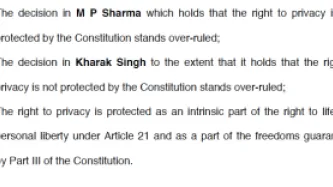
The Supreme Court has ruled that there is a fundamental right to privacy under the Indian constitution, establishing that “The right to privacy is protected as an intrinsic part of the right to life and personal liberty”. This was a unanimous ruling by a bench of nine supreme court justices, who heard the case following a decision in 2015 over whether the controversial Aadhaar biometric identity scheme was constitutional.
The judgment is clear: privacy and human dignity are intrinsically…

Content type: Report
Financial services are changing, with technology being a key driver. It is affecting the nature of financial services, from credit and lending through to insurance, and even the future of money itself.
The field of fintech is where the attention and investment is flowing. Within it, new sources of data are being used by existing institutions and new entrants. They are using new forms of data analysis.
These changes are significant to this sector and the lives of people it serves. This…

Content type: News & Analysis
This guest piece was written by Elonnai Hickok, Amber Sinha and Vanya Rakesh of the Centre for Internet and Society. It does not necessarily reflect the views or position of Privacy International.
In 2009, the Government of India set up the Unique Identification Authority of India (UIDAI) as an attached office of the erstwhile Planning Commission of India via an executive order. The mandate of the UIDAI was to assign a 12-digit unique identification (UID) number (…
Content type: Long Read
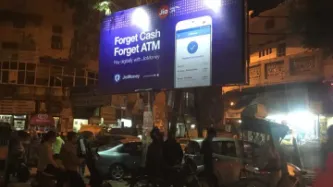
The move to digital payments, without an adequate legal framework, is a double-blow to privacy. India is proving to be the case study of how not to do the move to the cashless society. We are seeing in India the deeper drives to digital: linking financial transactions to identity. On the 8th November, Prime Minister Modi of India announced that 500 and 1,000 rupee notes – 86% of the money supply – would be removed from circulation. The initial justification for this was to tackle the…

Content type: News & Analysis
This guest piece was written by Elonnai Hickok and Vipul Kharbanda of the Centre for Internet and Society. It does not necessarily reflect the views or position of Privacy International.
In light of the complex challenges and threats posed to, and by, the field of information telecommunications in cyberspace, in 1998 the draft resolution in the First Committee of the UN General Assembly was introduced and adopted without a vote (A/RES/53/70)…
Content type: Advocacy
This stakeholder report is a submission by Centre for Internet and Society India (CIS India) and Privacy International (PI). CIS is a non-profit organisation that undertakes interdisciplinary research on internet and digital technologies from policy and academic perspectives. Through its diverse initiatives, CIS explores, intervenes in, and advances contemporary discourse and practices around internet, technology and society in India, and elsewhere. PI is a human rights organisation that…
Content type: Long Read
Written by: Centre for Internet and Society
This guest piece was written by representatives of the Centre for Internet and Society (CIS). It does not necessarily reflect the views or position of Privacy International.
Introduction
As part of the State of the Surveillance project, CIS conducted a review of surveillance law, policy, projects, and trends in India. Below we provide a snap shot of key legal provisions governing surveillance in India and touch on…
Content type: Press release
A 400 gigabyte trove of internal documents belonging to surveillance company Hacking Team has been released online. Hacking team sells intrusive hacking tools that have allegedly been used by some of the most repressive regimes in the world.
The documents reportedly confirm Hacking Team has customers in 35 countries, including some that routinely abuse human rights. These documents seemingly validate research conducted by Citizen Lab…

Content type: Long Read
Privacy International in October 2014 made a criminal complaint to the National Cyber Crime Unit of the National Crime Agency, urging the immediate investigation of the unlawful surveillance of three Bahraini activists living in the UK by Bahraini authorities using the intrusive malware FinFisher supplied by British company Gamma.
Moosa Abd-Ali Ali, Jaafar Al Hasabi and Saeed Al-Shehabi, three pro-democracy Bahraini activists who were granted asylum in the UK, suffered variously…

Content type: News & Analysis
Last year, UK-based surveillance company Gamma TSE sold the Indonesian military US$ 6.7 million worth of equipment as part of the military's weapons modernisation effort. As early as 2005, Indonesian officials were soliciting the advice of a close partner of Gamma, Germany-based Elaman, to create technical surveillance unit (TSU), according to a white paper published as part of the WikiLeak SpyFiles and found in the Surveillance Industry Index.
Gamma and Elaman are…

Content type: News & Analysis
After two years of pressing the Government to come clean on what, if anything, they are doing to investigate the potentially illegal export of the spyware FinFisher, a ruling today by the Administrative Court in Privacy International’s favour marks a significant turning point in our long-running campaign to bring more transparency and accountability to the surveillance industry.
The High Court slammed Her Majesty’s Revenue and Customs for not disclosing whether it was investigating…

Content type: News & Analysis
This year, an advanced surveillance system called the "Platform for Unified Monitoring and Analysis" will come online in Colombia. Frustrated with the the previous system, Esperanza, which only monitored telecommunications activity, the Colombian authorities turned to PUMA (Plataforma Única de Monitoreo y Análisis), a system that will allow them to monitor both telecommunications traffic and IP traffic in one source. The system, now based on Police property in Western Bogota, will now be…