
Search

Content type: Report
The use of biometric technology in political processes, i.e. the use of peoples’ physical and behavioural characteristics to authenticate claimed identity, has swept across the African region, with 75% of African countries adopting one form or other of biometric technology in their electoral processes. Despite high costs, the adoption of biometrics has not restored the public’s trust in the electoral process, as illustrated by post-election violence and legal challenges to the results of…

Content type: News & Analysis
Image was found here.
As part of Privacy International’s mission, we aim to take the issues emerging from our research and that of our partners to new spaces of debate and to the attention of stakeholders at the national, regional and international level.
In April 2018, Privacy International was able to engage for the first time with the African Commission on Human and People's Rights (ACHPR) at its 62nd Ordinary Session, which took place in Nouakchott, Mauritania.
The right to privacy does…

Content type: Report
La seguridad digital es una discusión crítica y hay que reconocer que la sociedad civil y los grupos de interés público no han sido suficientemente considerados. Como respuesta, varias organizaciones de la sociedad civil de América Latina se unieron para presentar informes que recuerdan a las entidades estatales responsables de formulación de políticas públicas que la seguridad digital debe tener en cuenta la seguridad de las personas y los derechos humanos. Presentamos la serie, Derechos…

Content type: Advocacy
At the core of data protection debates, there is a power play between empowering individuals to control their data and empowering those who use (or want to) use their data. By regulating data processing, it provides avenues for individuals to exercise their rights if there is any unlawful interference in this power play.
It is crucial for any regulatory framework to be centred around the protection of human rights, autonomy and dignity, and therefore essential to ensure that…

Content type: News & Analysis
Written by the National Coalition for Human Rights Defenders - Kenya and Privacy International
05:00: Mercy’s alarm goes off. She gets out of the warmth of the bed into the piercing morning chill. She switches on the bedside lamp and reaches for her Bible. She then checks in onto her devotional group on Facebook, as she does every morning. Her Facebook app keeps track of her location, and the time she wakes up.
05:24: She steps into the shower and prepares for her day in the…

Content type: Long Read
To celebrate Data Privacy Week, we spent the week discussing privacy and issues related to control, data protection, surveillance, and identity. Join the conversation on Twitter using #dataprivacyweek.
Do you live in a “smart city”? Chances are, you probably do (or at least your city claims to be). But do you know what exactly makes your city “smart”, beyond the marketing term? And what does this have to do with privacy?
Companies and governments will tell you that the more cameras, sensors…
Content type: Long Read
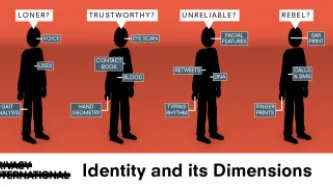
To celebrate International Data Privacy Day (28 January), PI and its International Network have shared a full week of stories and research, exploring how countries are addressing data governance in light of innovations in technology and policy, and implications for the security and privacy of individuals.
According to the World Bank, identity “provides a foundation for other rights and gives a voice to the voiceless”. The UN Deputy Secretary-General has called it a tool for “advancing…

Content type: News & Analysis
Overview
CIPIT is currently investigating how the privacy of Kenyan citizens was affected by the use of biometric data during the just concluded 2017 general and repeat elections. The IEBC is mandated by law to register voters, verify their registration details and conduct elections. Accordingly, the IEBC is the custodian of the public voter register. There have been reports that individuals received SMS texts from candidates vying for various political seats during the campaign period of the…

Content type: Long Read
The battle for Kenyan voters’ allegiance in the 2017 Presidential election was fought on social media and the blogosphere. Paid advertisements for two mysterious, anonymous sites in particular started to dominate Google searches for dozens of election-related terms in the months leading up to the vote. All linked back to either “The Real Raila”, a virulent attack campaign against presidential hopeful Raila Odinga, or Uhuru for Us, a site showcasing President Uhuru Kenyatta’s accomplishments. As…
Content type: Press release
A new investigation published today by Privacy International reveals the role of an American data-based digital advertising company in the highly divisive online re-election campaign of Kenyan president Uhuru Kenyatta.
In the run-up to Kenya's presidential election in August 2017, paid advertisements for two mysterious sites dominated Google searches for election-related terms and flooded Kenyans' social media feeds. All linked back to either 'The Real Raila', a virulent attack campaign…
Content type: News & Analysis
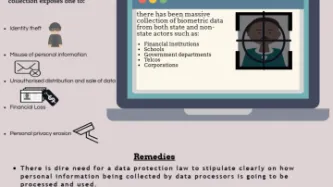
Recently, a text from a local telecommunications company inquired whether its subscribers knew that they could now enroll their voice so they could access various services securely and conveniently. This added a further dynamic to the on-going debate in several quarters on the accelerated adoption of biometrics in Kenya. Does Kenya have the necessary framework in place to safeguard the privacy and security of its citizens? The reality is, innovators will not wait for an optimal…

Content type: Advocacy
Este informe es presentado por la Asociación por los Derechos Civiles (ADC) y Privacy International (PI). La Asociación por los Derechos Civiles (ADC) es una organización no gubernamental, sin nes de lucro, ubicada en Buenos Aires, que promueve los derechos civiles y sociales en Argentina y otros países latinoamericanos. Fue fundada en 1995 con el objetivo de fortalecer una cultura jurídica e institucional que garantice los derechos fundamentales de la gente, basado en el respeto a la…

Content type: Advocacy
Thornsec is a piece of software developed by Privacy International’s Tech Team which is an automated way to deploy, test, and audit internal and external services for an organisation, saving a lot of time and creating a sustainable security model. We are using this software to run all of Privacy International’s services – website, calendar, project management tools, Tor hidden services, VPNs. The whole system runs on two servers and the whole cost is around US$1000 to set up.
Thornsec is…

Content type: News & Analysis
This piece was co-written with Valeria Milanes of the Asociación por los Derechos Civiles (ADC). A Spanish version is available here.
In January 2015, the intelligence regime in Argentina was put in the limelight following the death of Prosecutor Alberto Nisman. It was alleged that the intelligence services were involved in his death. This scandal prompted reform of the country’s intelligence system.
In February of the same year, the Intelligence Act (N° 25…
Content type: Press release
The European Court of Human Rights will hear a landmark case on surveillance tomorrow (7 November) as part of a challenge to the lawfulness of the UK’s surveillance laws and its intelligence agencies’ mass surveillance practices.
See the attached briefing for case background and historical information.
The case, described by campaigners as a “watershed moment for people’s privacy and freedom of expression across the world”, is being brought by Amnesty International, Liberty, Privacy…

Content type: Advocacy
This stakeholder report is a submission by Asociación por los Derechos Civiles (ADC) and Privacy International (PI). The Asociación por los Derechos Civiles (ADC) is a non-governmental, non-pro t organisation based in Buenos Aires that promotes civil and social rights in Argentina and other Latin American countries. It was founded in 1995 with the purpose of helping to strengthen a legal and institutional culture that guarantees the fundamental rights of the people, based on respect…

Content type: Advocacy
Earlier this month, it was reported that UK-based data analytics firm Cambridge Analytica had been quietly contracted by President Uhuru Kenyatta’s party in a bid to win a second term in office. Privacy International has written to Cambridge Analytica to learn more about how the company assessed the risk of its work in Kenya and how it will ensure that Kenyans’ personal data will be protected.
Content type: News & Analysis
This guest piece was written by Leandro Ucciferri of the Association for Civil Rights (Asociación por los Derechos Civiles). It does not necessarily reflect the views or position of Privacy International.
We look at our smartphone first thing in the morning to check the weather, and our to-do list for the day. During breakfast, we read the news and learn about what is going on in the rest of the world. In our commute to work or college, we scroll through our social media feeds…
Content type: Report
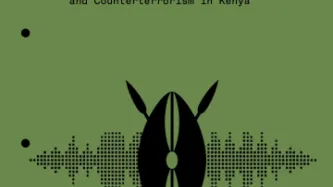
This investigation focuses on the techniques, tools and culture of Kenyan police and intelligence agencies’ communications surveillance practices. It focuses primarily on the use of surveillance for counterterrorism operations. It contrasts the fiction and reality of how communications content and data is intercepted and how communications data is fed into the cycle of arrests, torture and disappearances.
Communications surveillance is being carried out by Kenyan state actors, essentially…
Content type: Long Read
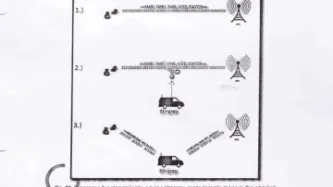
The use of IMSI catchers[1] to arrest individuals is rarely documented — as IMSI catchers are used secretively in most countries. The arrest of Colombian drug lord Henry López Londoño in Argentina is therefore a rare opportunity to understand both how IMSI catchers are used, and also the complexity of their extraterritorial use.
In October 2012, Londoño — also known as Mi Sangre (“My Blood”) — was arrested in Argentina. His arrest was the result of cooperation between the Dirección de…

Content type: News & Analysis
Este artículo fue co-escrita con Valeria Milanes de la Asociación por los Derechos Civiles (ADC). Una versión en ingles está disponible aquí.
En Enero de 2015, el sistema de inteligencia de Argentina fue objeto de atención pública luego de la muerte del fiscal Alberto Nisman, debido a la presunta participación de los servicios de inteligencia en dicho suceso. Este escándalo impulsó la reforma del sistema de inteligencia del país.
En Febrero del mismo…
Content type: Advocacy
This stakeholder report is a submission by Privacy International (PI) and the Right2Know Campaign (R2K). This report has been prepared with the assistance and research done by the Media Policy and Democracy Project. PI is a human rights organisation that works to advance and promote the right to privacy and fight surveillance around the world. R2K is a broad- based, grassroots campaign formed to champion and defend information rights and promote the free flow of information in South Africa…

Content type: Advocacy
This stakeholder report is a submission by Privacy International (PI). PI is a human rights organisation that works to advance and promote the right to privacy and fight surveillance around the world. PI wishes to bring concerns about the protection and promotion of the right to privacy in Namibia before the Human Rights Council for consideration in Namibia's upcoming Universal Periodic Review.
Content type: Press release
This week in Geneva, the UN Human Rights Committee will examine the Argentina’s compliance with the International Covenant on Civil and Political Rights (ICCPR), an international treaty which places obligations on signatories to guarantee human rights such as the right to privacy.
This review, by a body of independent experts charged with monitoring compliance with the ICCPR, comes at a critical time for Argentina laws and policies on privacy and surveillance.
Recent years have seen…
Content type: Press release
Esta semana en Ginebra, el Comité de Derechos Humanos de la ONU examinará el cumplimiento de la Argentina con el Pacto Internacional de Derechos Civiles y Políticos (PIDCP), un tratado internacional que establece obligaciones a los firmantes para garantizar los derechos humanos, como el derecho a la privacidad.
Este examen, por un grupo de expertos independientes encargados de vigilar el cumplimiento del PIDCP, llega en un momento crítico para las leyes y políticas de la Argentina sobre la…

Content type: Advocacy
La Asociación por los Derechos Civiles (ADC) y Privacy International toman nota de las respuestas del gobierno de Argentina a la lista de cuestiones antes de la presentación del informe, en particular en relación a la legislación, políticas y prácticas relacionadas con la vigilancia y la protección de los datos personales.
Privacy International es una organización de derechos humanos que trabaja para favorecer y promover el derecho a la privacidad y la lucha contra la vigilancia en todo el…

Content type: Advocacy
Asociación por los Derechos Civiles (ADC) and Privacy International note the replies by the government of Argentina to the list of issues prior to the submission of the report, in particular in relation to the laws, policies and practices related to surveillance and protection of personal data.
Privacy International is a human rights organisation that works to advance and promote the right to privacy and fight surveillance around the world. The Asociación por los Derechos Civiles (ADC) is a…

Content type: Advocacy
La Asociación por los Derechos Civiles (ADC) y Privacy International toman nota de las respuestas del gobierno de Argentina a la lista de cuestiones antes de la presentación del informe, en particular en relación a la legislación, políticas y prácticas relacionadas con la vigilancia y la protección de los datos personales.
Privacy International es una organización de derechos humanos que trabaja para favorecer y promover el derecho a la privacidad y la lucha contra la vigilancia en todo el…

Content type: News & Analysis
This guest piece was written by Jane Duncan of the Right2Know Campaign. It does not necessarily reflect the views or position of Privacy International.
On 23rd March the United Nations Human Rights Committee released its assessment on South Africa’s compliance with the International Covenant on Civil and Political Rights (ICCPR). The report includes a blistering attack on the Government for failing to respect the privacy of the communications of users and makes…

Content type: Advocacy
This stakeholder report is a submission by Privacy International (PI), Unwanted Witness Uganda, the Collaboration on International ICT Policy for East and Southern Africa (CIPESA) and the East and Horn of Africa Human Rights Defenders Project (EHAHRDP).