
Search

Content type: News & Analysis
PI's full analysis can be read here
On 29 February 2016, the European Commission and the US government released the details of the proposed EU-U.S. “Privacy Shield”. The “Privacy Shield” replaces the now defunct so-called “Safe Harbor”.
The Privacy Shield is in fact a significant number of documents from various parts of the U.S. administration, which merely outline the existing, weak U.S. safeguards applicable to personal data of EU citizens. These documents are…

Content type: Advocacy
This stakeholder report is a submission by Privacy International (PI) and Thai Netizen Network (TNN). PI is a human rights organisation that works to advance and promote the right to privacy and ght surveillance around the world. TNN is a Bangkok-based organisation that works to promote human rights in Internet policy and support the work of human rights defenders in digital environment. PI and TNN wish to to bring concerns about the protection and promotion of the right to privacy in…

Content type: Long Read
The Investigatory Powers Tribunal (“IPT”) today held that GCHQ hacking of computers, mobile devices and networks is lawful, wherever it occurs around the world. We are disappointed that the IPT has not upheld our complaint and we will be challenging its findings.
Our complaint is the first UK legal challenge to state-sponsored hacking, an exceptionally intrusive form of surveillance. We contended that GCHQ hacking operations were incompatible with democratic principles and human rights…

Content type: News & Analysis
Sometimes it takes an unexpected stranger to remind you what you have, and what you are at risk of losing. Roman Zakharov, a Russian publisher who challenged Russia’s surveillance legislation, is that stranger for many Brits and Europeans. The Grand Chamber of the European Court of Human Rights judgement on Friday 4 December 2015 was remarkable, not because it tore up the rule book on the jurisprudence surrounding state surveillance in the Council of Europe, but because it followed…

Content type: Long Read
Written by Eva Blum-Dumontet
A recent case of lèse-majesté in Thailand (speaking ill of the monarchy) is a worrying example of how Western companies do not just work with governments that fall short of international human rights standards, but can actually facilitate abuses of human rights.
Our investigation on the trial of Katha Pachachirayapong — accused of spreading rumours on the ill-health of the King Bhumibol Adulyadej, thereby causing sharp falls in the Thai stock market — reveal the…

Content type: News & Analysis
Today the Grand Chamber of the Court of Justice of the European Union ruled that mass surveillance is in violation of the right to privacy and that a legal system that provides no legal redress against interference with someone's privacy falls short of EU human rights standards.
The Court was seized following a complaint initiated by Mr Schrems to the Irish Data Protection Commissioner about the transfer of his Facebook data from Ireland to the US under the now defunct “…
Content type: Press release
28 October 2015
Leading privacy and consumer organizations meeting in Amsterdam this week called on data protection officials around the world to support a meaningful legal framework that would protect the fundamental rights of both citizens and consumers in the online era.
In a statement issued today at the International Data Protection and Privacy Conference, the organizations criticized a just-released “Bridges” report that primarily recommended a continuation of industry self-regulation…
Content type: News & Analysis
The Coalition Against Unlawful Surveillance Exports (CAUSE) has today released a new policy paper calling on the EU to take the opportunity to update its Dual Use Regulation to ensure that surveillance technologies are not exported from Europe and used for human rights violations.
The proposals have been developed by the international secretariat of CAUSE, a coalition of NGOs consisting of Access, Amnesty International, Digitale Gesellschaft, Human Rights Watch, the…
Content type: News & Analysis
Privacy laws around the world are under threat by ambitious governments and voracious industry. Sixty-six privacy, digital rights and consumer rights organisations from around the world have joined forces to push back against attempts to weaken European privacy legislation. The coalition today wrote to the President of the European Commission (the civil service of the European Union) to demand that high levels of privacy protections must be respected in Europe's ongoing revision of its data…
Content type: Press release
The UN's top human rights body, the Human Rights Council, today has passed a landmark resolution endorsing the appointment of an independent expert on the right to privacy. For the first time in the UN's history, an individual will be appointed to monitor, investigate and report on privacy issues and alleged violations in States across the world.
The resolution, which appoints a Special Rapporteur on the right to privacy for an initial period of three years, was spearheaded by Germany and…

Content type: News & Analysis
The French Government unveiled a new Bill that aims at providing a legal framework to intelligence services last Friday. While Privacy International welcomes the positive step of placing powers that were until now poorly regulated under the law, we remain alarmed by many aspects of this Bill. Two months after the deadly terrorist attacks in Paris that targeted the satirical weekly Charlie Hebdo and a Kosher supermarket, the Government seeks to provide the intelligence services with a…

Content type: Long Read
Modern day government surveillance is based on the simple concept of “more is more” and “bigger is better”. More emails, more text messages, more phone calls, more screenshots from Skype calls. The bigger the haystack, the more needles we can find.
Thanks to Edward Snowden, we know that this fundamental idea drives intelligence agencies like the NSA and GCHQ - the desire to collect it all, to generate gigantic haystacks through which to trawl. In the almost two years since the first of Snowden…

Content type: News & Analysis
Intelligence sharing agreements can be open and transparent. In fact, the Five Eyes have already disclosed information sharing agreements that relate to key international law enforcement and national security measures.
They’re called mutual legal assistance treaties, or MLATs, and they’ve existed between the Five Eyes, excluding New Zealand, for decades. MLATs define the scope of cooperation between States in criminal investigations: States share sensitive information in criminal…

Content type: News & Analysis
The following was written by Mike Rispoli, Communications Manager at Privacy International, and appeared in the 'Journalism in Europe' discussion series, hosted by Central European University:
"The response by world leaders to the horrific terrorist attacks in France earlier this month has been all too familiar. As officials rallied for freedom of expression, they called for increased vigilance against extremists by expanding government surveillance powers.
Leading the way is UK Prime…

Content type: News & Analysis
To read Privacy International's take on the ruling, go here.
What does the decision actually say?
The primary question that the Court was asked to consider was whether Google Search has obligations under the Data Protection Directive 1995, the EU legal framework regulating how public bodies and businesses deal with individuals’ personal data.
There were three primary issues at hand: the first was whether Google Inc., the international entity which operates Google Search, was under the…

Content type: News & Analysis
Since the European Court of Justice in May ruled in the “right to be forgotten” case, there has been a dizzying amount of debate about the decision, and its implications for privacy and free expression.
A main thread within these discussions is an old story that US Industry loves to tell and has told for some time: Europeans love privacy law, and Americans love free speech, and the twain shall never meet.
The Google Search case at the European Court of Justice has fuelled this view…
Content type: Press release
Privacy International, Reporters Without Borders, Digitale Gesellschaft, FIDH, and Human Rights Watch welcome news that the European Commission will move ahead and add specific forms of surveillance technology to the EU control list on dual use items, thus taking steps to finally hold companies to account who sell spy equipment and enable human rights abuses.
These important steps demonstrate that policymakers are beginning to wake up to the real harm that exists…
Content type: Press release
The ruling today from the European Court of Justice, invalidating the European Union’s 2006 Data Retention Directive policy, was strong and unequivocal: the right to privacy provides a fundamental barrier between the individual and powerful institutions, and laws allowing for indiscriminate, blanket retention on this scale are completely unacceptable.
As the Court states, it is not, and never was, proportionate to spy on the entire population of Europe. The types of data retained under this…
Content type: Press release
World leaders must commit to keeping invasive surveillance systems and technologies out of the hands of dictators and oppressive regimes, said a new global coalition of human rights organizations as it launched today in Brussels.
The Coalition Against Unlawful Surveillance Exports (CAUSE) – which includes Amnesty International, Digitale Gesellschaft, FIDH, Human Rights Watch, the New America Foundation’s Open Technology Institute, Privacy International, and Reporters without Borders – aims to…

Content type: News & Analysis
Facing intense scrutiny from a Swiss government inquiry into the human rights impact of the commercial surveillance trade, companies have packed up and are no longer attempting to export their spying technology from Switzerland.
Speaking with St. Galler Tagblatt, one of Switzerland’s largest German-language daily newspapers, government spokeswoman Marie Avet confirmed that the companies have cancelled export applications for surveillance technology - including all applications for…
Content type: News & Analysis
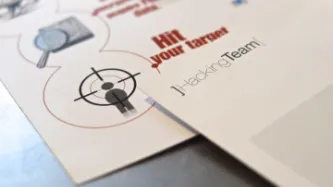
Only a few days after it was reported that intrusive surveillance technology developed and sold by Italian surveillance company Hacking Team was found in some of the most repressive countries in the world, Privacy International has uncovered evidence which suggests the company has received over €1 million in public financing.
It has come to Privacy International’s attention that Hacking Team appears to have received €1.5 million from two venture capital funds originating from the Region of…

Content type: News & Analysis
In the same week that the Advocate General of the European Court of Justice labelled the retention of electronic communications data throughout Europe as a “serious interference with the right to privacy”, the French National Assembly has codified into law a suite of invasive and unrestrained surveillance powers, allowing an expanded range of government bodies invasive access to citizens electronic communications data and content and threatening the privacy rights of the French people.…

Content type: News & Analysis
Update:
After an initial discussion with technical and government experts involved in drafting and negotiating the new controls on “intrusion software”, some of our initial questions have been clarified. To read what they had to say, go here.
One of the major dangers of imposing export controls on surveillance systems is the risk of overreach. While you want the scope of the systems being controlled and the language to be wide enough to catch the targeted product and its variants, you also…

Content type: News & Analysis
The proliferation of private companies across the world developing, selling and exporting surveillance systems used to violate human rights and facilitate internal repression has been largely due to the lack of any meaningful regulation.
But a huge step toward finally regulating this billion-dollar industry was taken this week, when on Wednesday night the 41 countries that make up the Wassenaar Arrangement, the key international instrument that imposes controls on the export of…

Content type: News & Analysis
Through the Aiding Privacy project, Privacy International is promoting the development of international standards around data protection in the humanitarian and development fields and working with relevant organisations to make this happen.
A new contribution towards this goal, Protecting Beneficiary Privacy: Principles and operational standards for the secure use of personal data in cash and e-transfer programmes, was released last week by the Cash Learning Partnership (CaLP) and…

Content type: News & Analysis
In a move that echoes strong action taken in the past by European officials to protect privacy, the Belgian and Dutch data protection authorities on Wednesday announced that they will begin an investigation into the security of the SWIFT financial system.
The announcement comes on the heels of our letters to twenty-eight European DPAs last month, which sought answers regarding the NSA's reportedly unauthorized access to SWIFT's financial messaging system and asked for an…

Content type: News & Analysis
Today’s much-anticipated launch of the 2013 Aid Transparency Index, an industry standard for assessing transparency among major aid donors, shows that, despite progress, many aid agencies continue to maintain secrecy around what they are funding.
Further, for those agencies that achieved high rankings in the index, transparency alone does not prevent one of our larger concerns: aid which facilitates impermissible surveillance of communities and individuals in the developing world.…

Content type: News & Analysis
In an encouraging first response to our complaint against surveillance company Gamma International (Gamma), the UK National Contact Point (NCP) of the Organisation for Economic Cooperation and Development (OECD) announced that it will further investigate our claim against Gamma, as the evidence submitted appears to substantiate our allegations.
In February 2013, Privacy International, together with the European Center for Constitutional and Human Rights, Bahrain Watch, the Bahrain Center…

Content type: News & Analysis
A longer version of this article was previously published in Wired on 10 May 2013.
We all know surveillance is big in Putin’s Russia. What you may not know is that Russia’s surveillance tech is being used all over the world, even in the U.S.
The Kremlin is up to its domes in spy technology. One reason is fear, provoked by the Arab Spring, of a growing and diffuse protest movement that uses social media to organize. Notably, the authorities have taken an interest in DPI (…

Content type: News & Analysis
The drive for accountability in aid spending has put humanitarian and development agencies under pressure to collect an ever-growing amount of data about those who receive their assistance. Donors also increasingly demand that new technologies are deployed to ensure aid reaches those it is targeted at; preventing people from fraudulently using refugees’ identities, for example, was a key motivation behind UNHCR’s recent introduction of biometric technology to register Syrian…